Kyoto · HigashiyamaNo.405★★★Open in map →
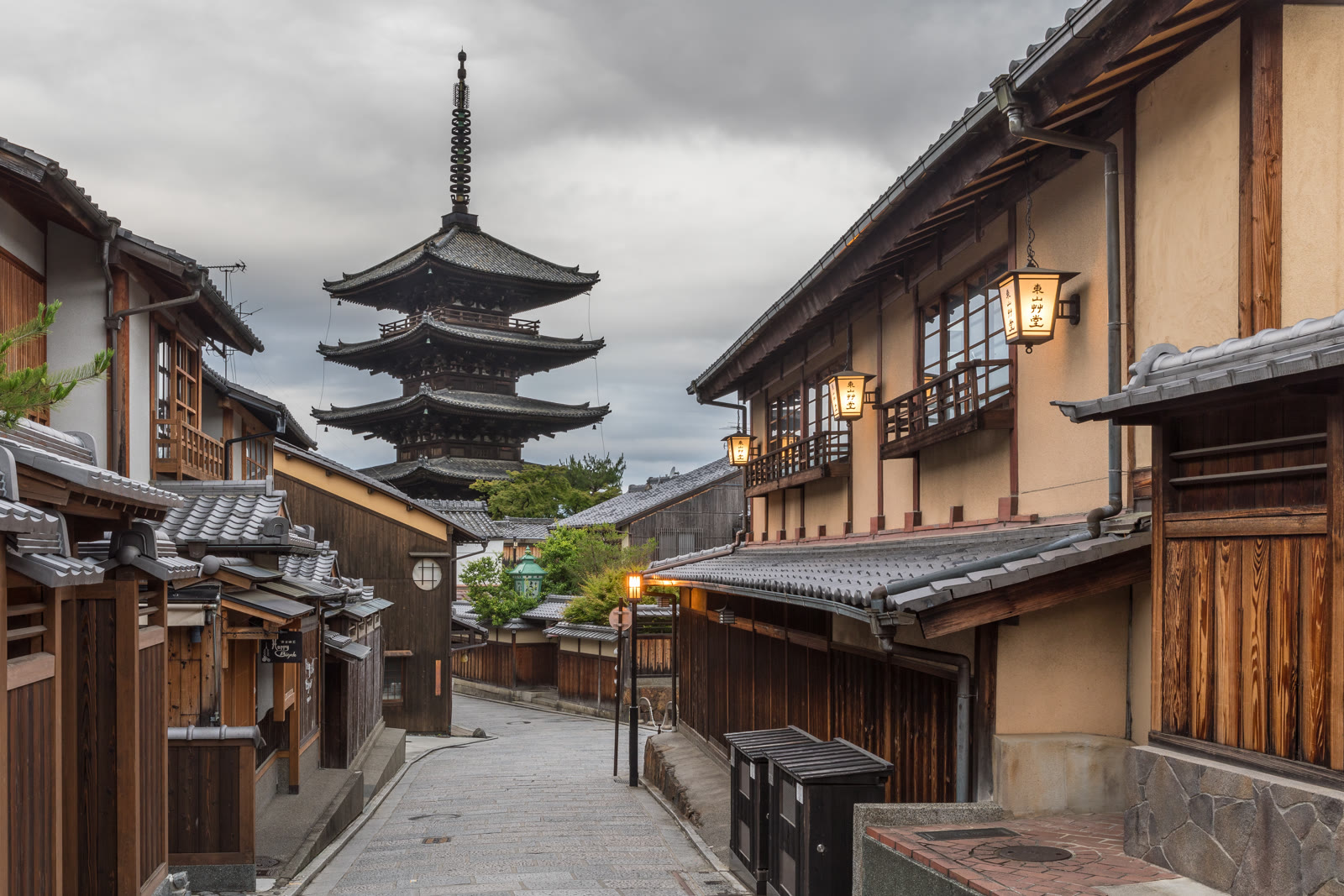
The Yasaka Pagoda
The 46-metre five-storey pagoda of Hokanji, standing in the middle of the Higashiyama lanes. Rebuilt in 1440, it is the only nationally designated Important Cultural Property pagoda in Japan whose interior visitors can enter and climb.
- FromKyoto Stn
- ~30 minKeihan, then a 12-min walk
- Get off atGion-Shijo Station (Keihan Main Line)
- On foot
- The Yasaka Pagoda
Where it is
90 more notes in Kyoto · open the map →What to look for — in walking order
- The pagoda from Yasaka-dorithe sloping lane below it, where the pagoda closes the view between machiya roofs; the defining Higashiyama composition
- The interior, when opensteep stairs to the second storey inside the frame — the only Important Cultural Property five-storey pagoda in Japan you can climb
- The isolation of itthe pagoda stands almost alone among houses, the surviving fragment of a much larger complex
- The lanes toward KiyomizuSannenzaka and Ninenzaka continue uphill from here, which is how the pagoda fits into the walk rather than being a stop
How to actually get there
- Kyoto Stn → Tofukuji Stn (JR Nara Line, ~3 min), change to the Keihan Main Line.
- Tofukuji Stn → Gion-Shijo Stn (Keihan, ~5 min).
- Walk east and uphill through the Higashiyama lanes to the pagoda (~12-15 min).
- Continue up Sannenzaka and Ninenzaka to Kiyomizu-dera.
- Kyoto Stn → Gion-Shijo Stn, then walk up through Higashiyama
- From Kyoto Station take the JR Nara Line one stop to Tofukuji, change to the Keihan Main Line and ride to Gion-Shijo, about 15 minutes in total. From the station walk east and uphill through the Higashiyama lanes for roughly 12 to 15 minutes; the pagoda is visible ahead for most of the climb. City bus 206 to the Kiyomizu-michi stop is the alternative and leaves a shorter walk.
- Gion-Shijo Stn → Kyoto Stn
- Walk back down through the lanes to Gion-Shijo and reverse via Tofukuji. The Keihan runs late, which suits a dawn start followed by a long day in Higashiyama.
About the place
The Yasaka Pagoda is what the lanes of Higashiyama are arranged around: walk up from Gion toward Kiyomizu and the pagoda appears at the end of a sloping street, framed between machiya roofs, which is the single most photographed composition in Kyoto. At 46 metres it is the third tallest surviving five-storey pagoda in Japan, after those at Toji and Kofukuji. What almost no visitor knows is that it opens. Most pagodas in Japan are sealed structures — you look at them. Hokanji's is the only pagoda designated an Important Cultural Property whose interior is open to visitors, and you can climb as far as the second storey on steep internal stairs, standing inside the frame that holds the whole thing up. The opening is irregular and depends on weather and the temple's circumstances, so it cannot be planned around; the correct approach is to walk past, see whether the gate is open, and go in if it is. The temple around the pagoda is small — the pagoda is essentially all that remains of what was once a much larger complex, which is why it stands so oddly alone in a residential street.
How to enjoy it
Come at dawn. This lane is one of the most crowded places in Kyoto from mid-morning, and one of the emptiest at six — the pagoda is outdoors and the composition is free at any hour, so the only thing early costs you is sleep. It works as a waypoint rather than a destination: Yasaka Shrine and Gion below, Sannenzaka and Kiyomizu above, and the pagoda sits at the hinge. If you find the gate open, go in without hesitating, because you cannot count on it being open next time. Note that the residential lanes around here have strict photography rules on private property — stay on the public street.
Background & history
Hokanji's foundation is traditionally traced to the sixth century, which would make it one of the oldest religious sites in the Kyoto basin, predating the capital itself. The pagoda burned repeatedly, as wooden pagodas do; the structure standing today was rebuilt in 1440 by Ashikaga Yoshinori, the sixth Muromachi shogun, four years after the fire of 1436 destroyed its predecessor. The surrounding temple buildings were progressively lost over the centuries, leaving the pagoda isolated among later houses — the reason it now reads as a monument in a street rather than as part of a precinct.
Before you go
- Cash
- Looking at the pagoda from the street costs nothing. When the interior is open there is a small admission charged at the gate in cash. The Keihan and city buses take IC cards.
- Good to know
- Interior opening is irregular and subject to weather and the temple's circumstances — treat it as a bonus, not a plan. The internal stairs are steep and narrow. The surrounding lanes are residential and several private streets nearby prohibit photography entirely; the public road below the pagoda does not.
- Another way
- Kyoto city buses 206 and 100 stop at Kiyomizu-michi, about 5 minutes' walk from the pagoda. From Kyoto-Kawaramachi on the Hankyu line the walk is roughly the same as from Gion-Shijo.
- After you get off
- From Gion-Shijo Station walk east along Shijo to Yasaka Shrine, turn south, and follow the lanes uphill; the pagoda closes the view ahead. About 12 to 15 minutes.
Nearby notes
 Zairon / CC BY-SA 4.0
History · Kyoto★
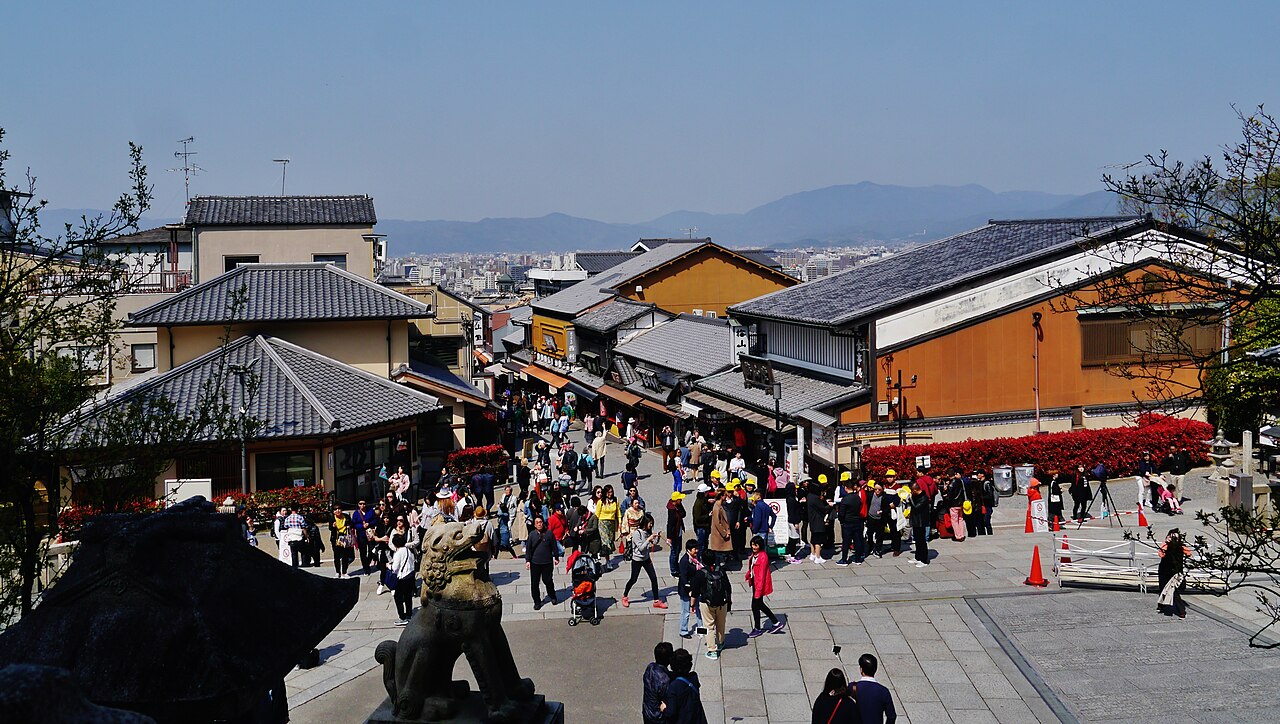
Sannenzaka and Ninenzaka
0.1 km · straight line
 Guilhem Vellut from Annecy, France / CC BY 2.0
History · Kyoto★
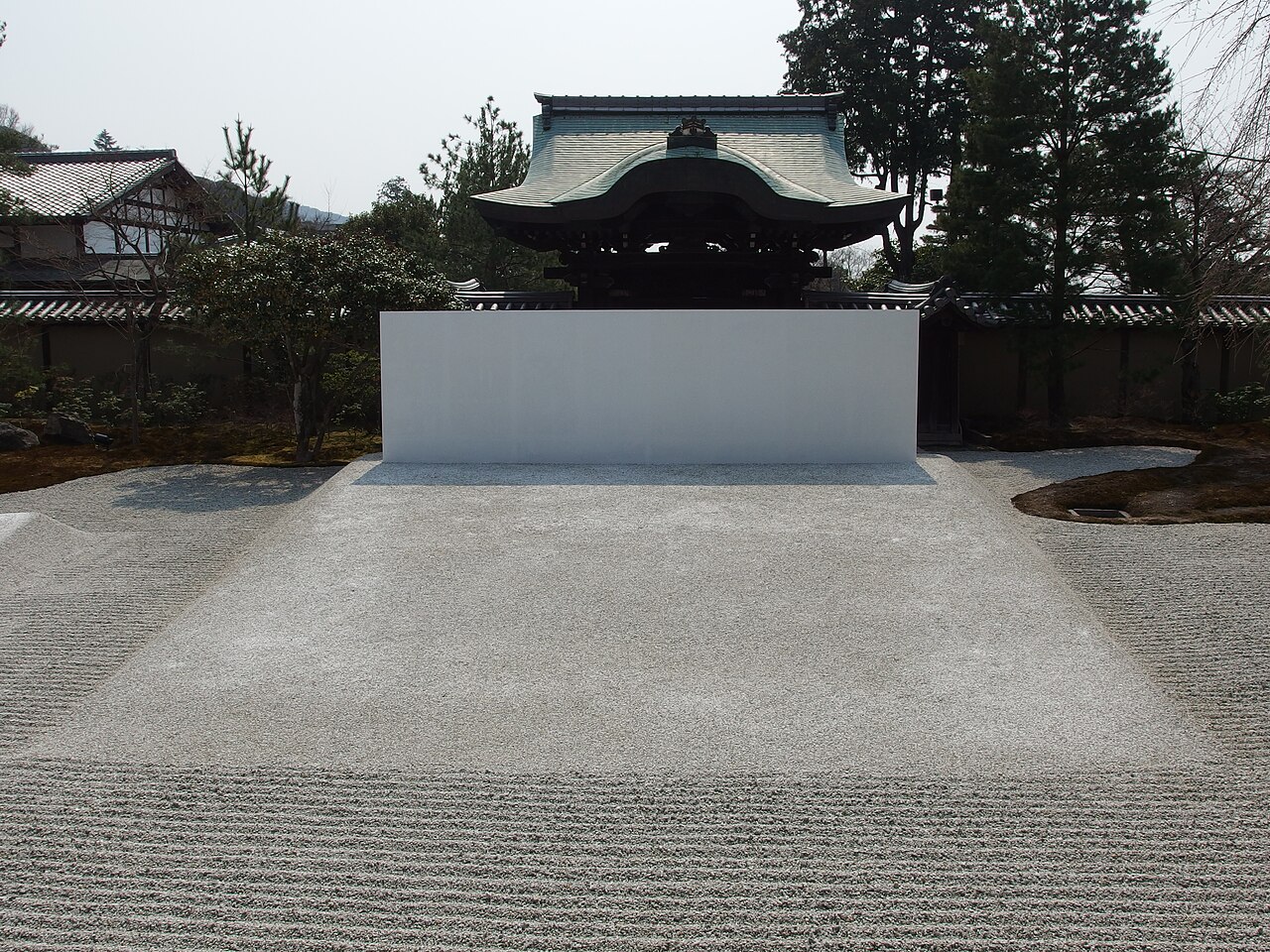
Kodai-ji
0.2 km · straight line
 DXR / CC BY-SA 4.0
History · Kyoto★★★
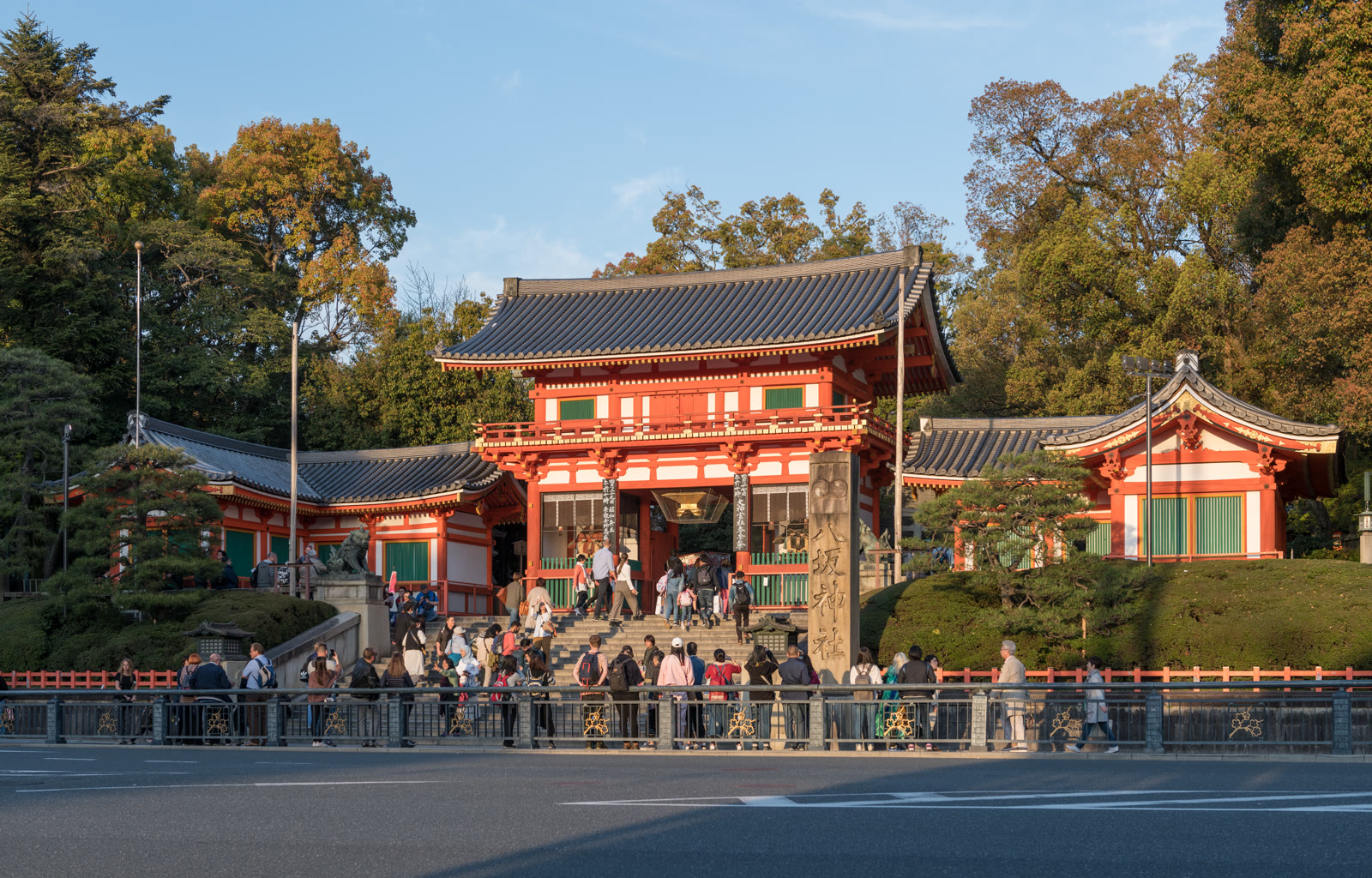
Yasaka Shrine
0.6 km · straight line
 Asturio Cantabrio / CC BY-SA 4.0
History · Kyoto★★★
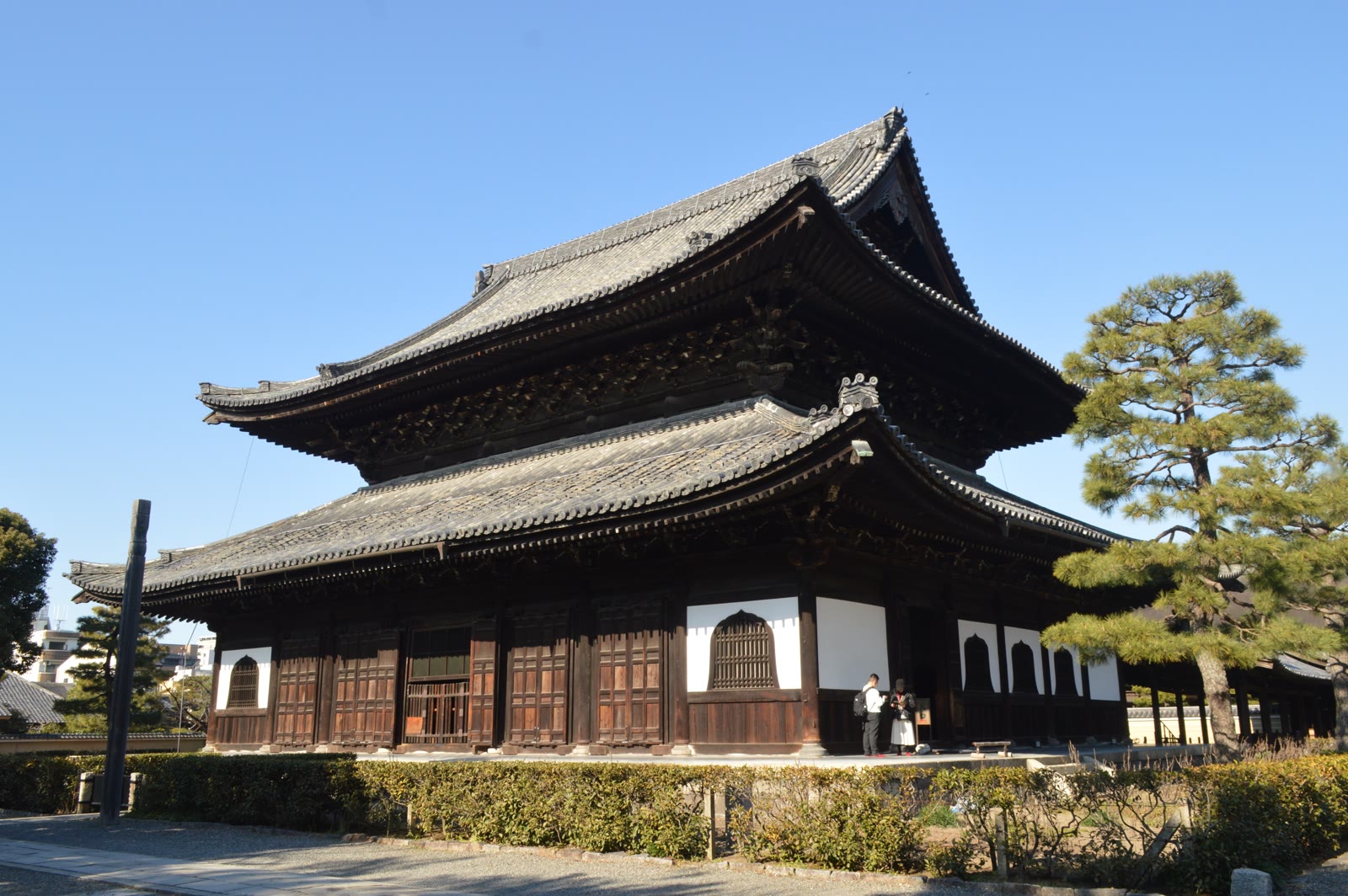
Kenninji
0.6 km · straight line
Distances are straight lines on the map, not travel times.