Kyoto south · Ujitawara · YuyadaniNo.016★Open in map →
Nagatani Soen's Birthplace
— where sencha was born in 1738
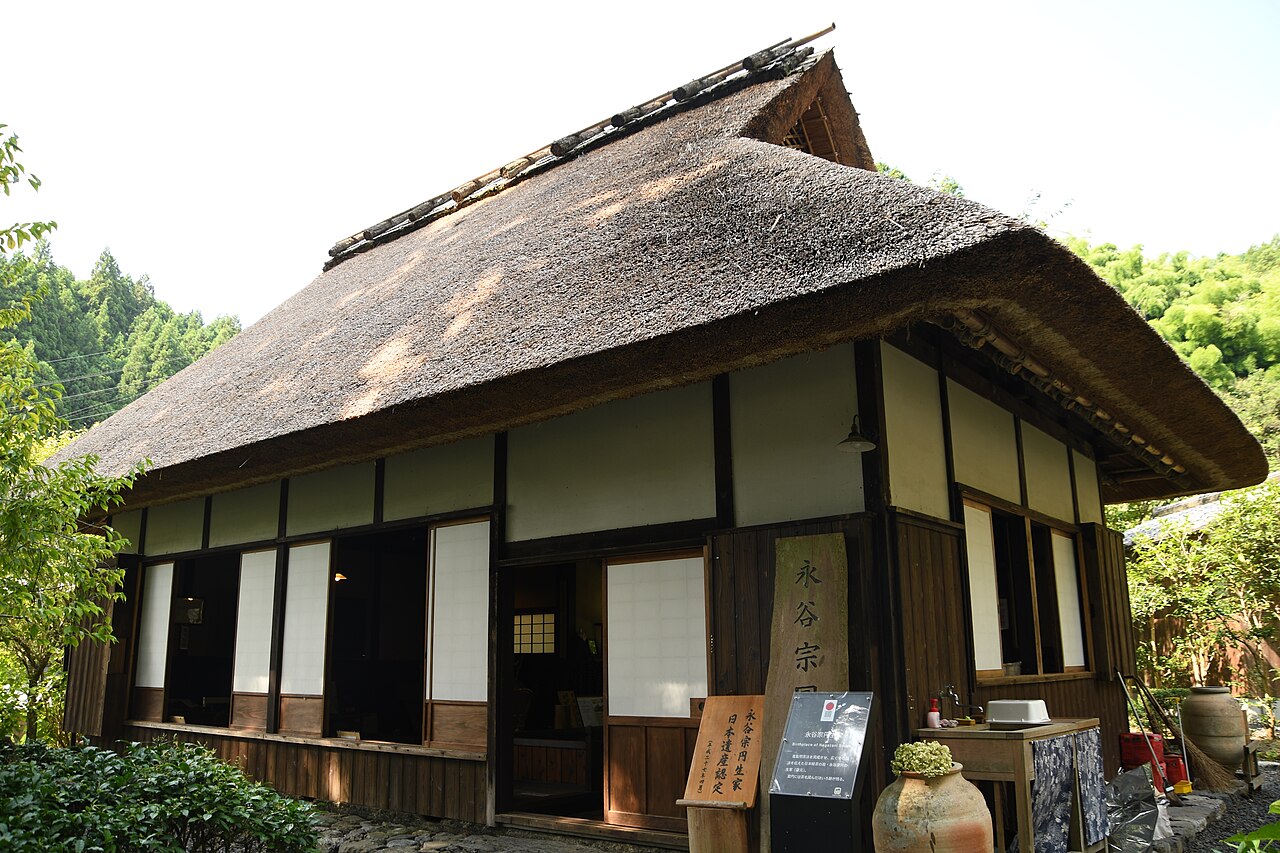
A restored thatched house in a narrow tea valley south of Uji, marking where the hand-rolled sencha method was perfected. It is a Japan Heritage cultural property.
- FromKyoto Stn
- ~90 minbus (infrequent)
- Get off atYuyadani stop
- On foot
- Nagatani Soen's Birthplace
The sweet spot
It stays quiet because it is a working farm hamlet, not a tourist tea district: there is little English information about it, it sits off the rail lines and is reached by infrequent buses, and it is away from the main Uji and Kyoto tourist flow. The house interior opens only on weekends and holidays.
Where it is
90 more notes in Kyoto · open the map →What to look for — in walking order
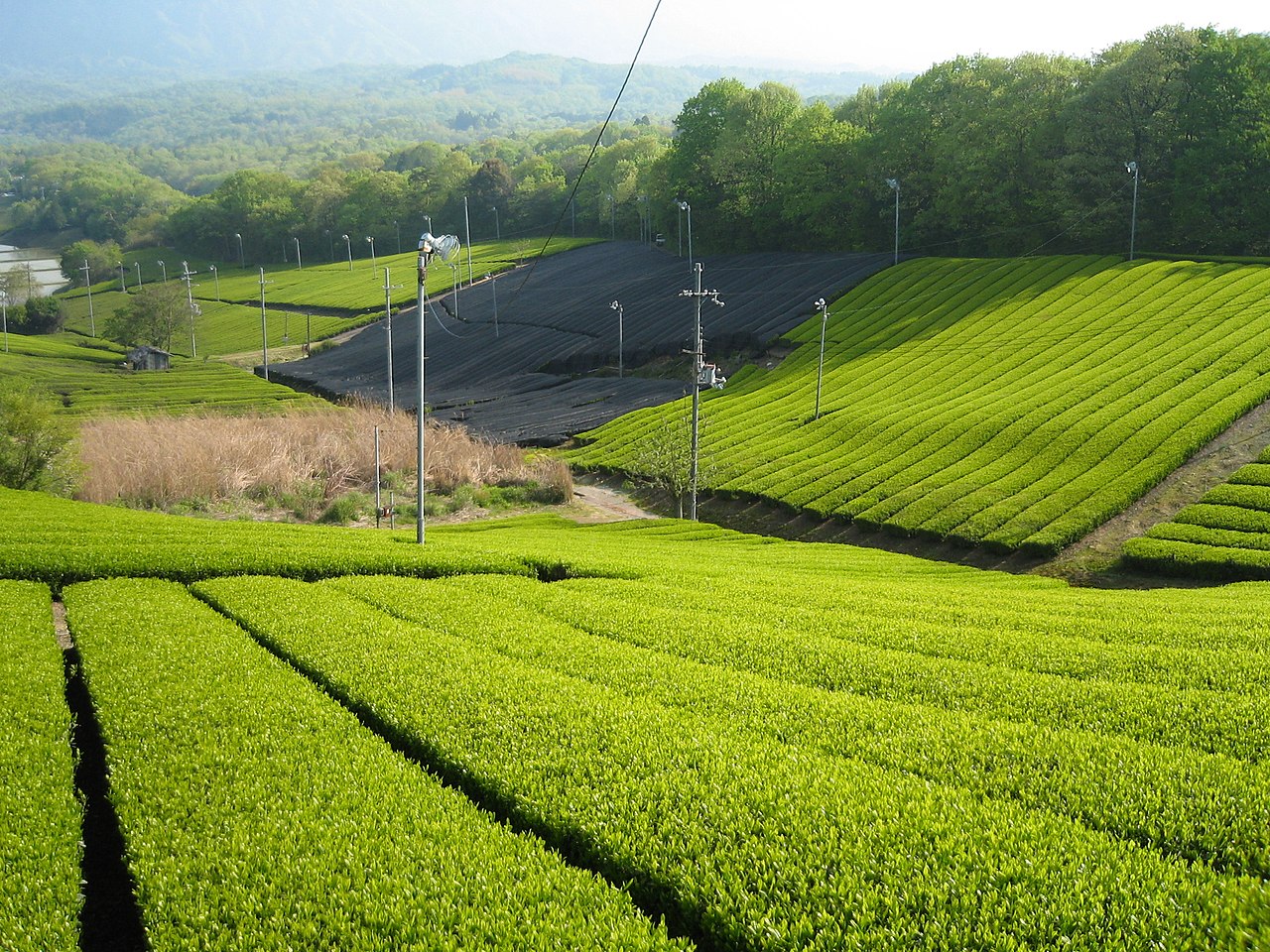
- Terraced tea slopesrows of tea hedges climbing the valley that Soen worked, seen from the valley lane
- Chasoumei Shrinethe small shrine the old family compound once reached toward, just next door
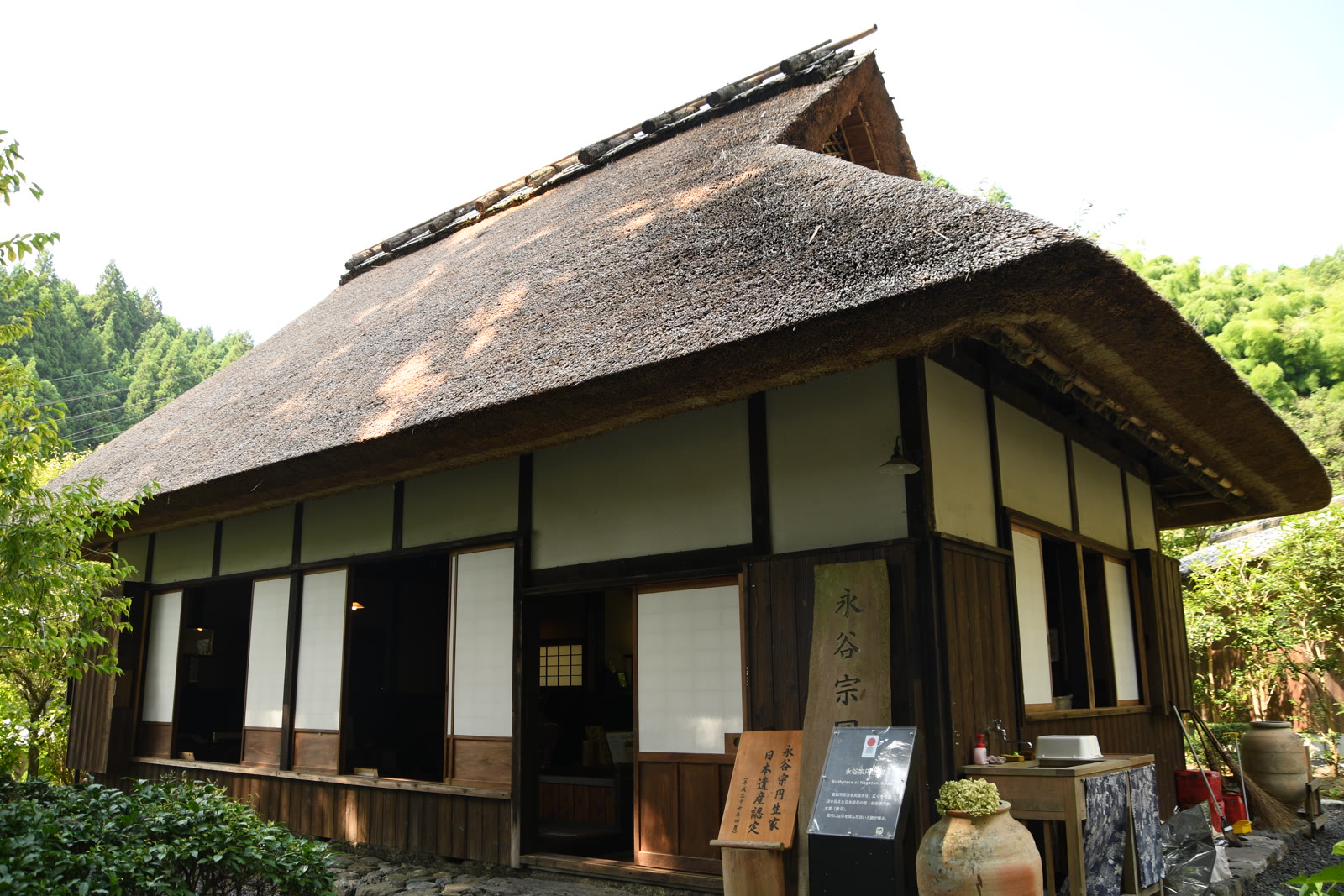
- The restored thatched housea 1960 rebuild on the Nagatani family plot, smaller than the original
- The old hoiro remainsthe heated drying-hearth where the leaf was hand-rolled, preserved inside the house
How to actually get there
- Kyoto Stn → Uji Stn (JR Nara Line rapid, ~17 min)
- Uji Stn → Ichumae stop (Kyoto Keihan Bus, ~25-30 min)
- Ichumae → Yuyadani stop (Ujitawara community bus, a few min)
- Yuyadani stop → the house (walk uphill, ~14 min)
- JR train + Kyoto Keihan bus + community bus
- Kyoto Stn →(JR Nara Line rapid, ~17 min)→ Uji Stn →(Kyoto Keihan Bus toward Ichumae, ~25-30 min)→ Ichumae stop →(Ujitawara community bus, a few min)→ Yuyadani stop → walk ~14 min uphill to the house. Total ~80-95 min. Buses are infrequent (the Uji bus runs only about 8 times a day) — check the day's timetable before you leave.
- return the same way
- Retrace the route: community bus to Ichumae, then Kyoto Keihan Bus to Uji, then JR to Kyoto. Buses here are sparse and services thin out by late afternoon — when you arrive, check the return times posted at the stop, and do not count on a late bus.
About the place
Yuyadani is a slender tea valley in the hills of Ujitawara, a town south of Kyoto. Here, in 1738, a tea farmer named Nagatani Soen perfected the aosei-sencha method — steaming fresh leaf, rolling it by hand over a heated bed called a hoiro, then drying it. This technique yielded a tea prized for its colour, aroma, and flavour, and it became the foundation of the sencha that most of Japan drinks today. Soen is remembered as the father of Japanese sencha. His birthplace stands up the valley: it is not the original Edo-period house but a smaller thatched building that the family rebuilt on the same plot in 1960, with the remains of the old drying-hearth kept inside.
How to enjoy it
The house interior opens on Saturdays, Sundays, and national holidays only, roughly 10:00 to 15:00, so plan for a weekend or holiday visit. Walk up the valley to take in the terraced tea fields, and treat the small thatched room as the quiet heart of the trip.
Background & history
Soen carried his new sencha to Edo, where a tea merchant named Yamamoto Kahei — of the house later known as Yamamotoyama — sold it, spreading both the tea and the method. The original compound was larger, reaching toward the neighbouring Chasoumei Shrine; low stone-wall remnants still trace its edges. Local residents built the present thatched house in 1960 to preserve the hoiro remains and the memory of the discovery. Ujitawara Town has designated the site a cultural property, and it is one of the sites of the Japan Heritage story '800-year history of Japanese tea.'
Before you go
- Cash
- Admission is a ¥200 upkeep fee, and farm tea is sold direct — carry small bills and coins, as rural spots are often cash-only.
- Good to know
- The house interior opens only on Saturdays, Sundays, and national holidays, about 10:00-15:00. The hamlet is people's homes, so keep quiet.
- Another way
- A car is the easiest way; there is a recommended parking area (Soenkoyuan Yantan) about a 14-15 min walk from the house. You can pair the trip with other spots in the same Ujitawara hills.
- After you get off
- From Yuyadani stop it is about a 14-minute walk uphill on the valley lane to the house; allow extra time.
Nearby notes
 Hunini / CC BY-SA 4.0
History · Kyoto★
Shoju-in
1.6 km · straight line
 Nytm / CC BY-SA 4.0
Local life · Kyoto★
Wazuka Ishitera Tea Fields
7.3 km · straight line
 vera46 / CC BY 2.0
Nature · Kyoto★
Dosenbo
8.2 km · straight line
 小池 隆 / CC BY 3.0
History · Kyoto★★
Mimuroto-ji
9.6 km · straight line
On a curated routeThe Tea Valley Line →
Distances are straight lines on the map, not travel times.